Phone:
(701)814-6992
Physical address:
6296 Donnelly Plaza
Ratkeville, Bahamas.

Phone:
(701)814-6992
Physical address:
6296 Donnelly Plaza
Ratkeville, Bahamas.
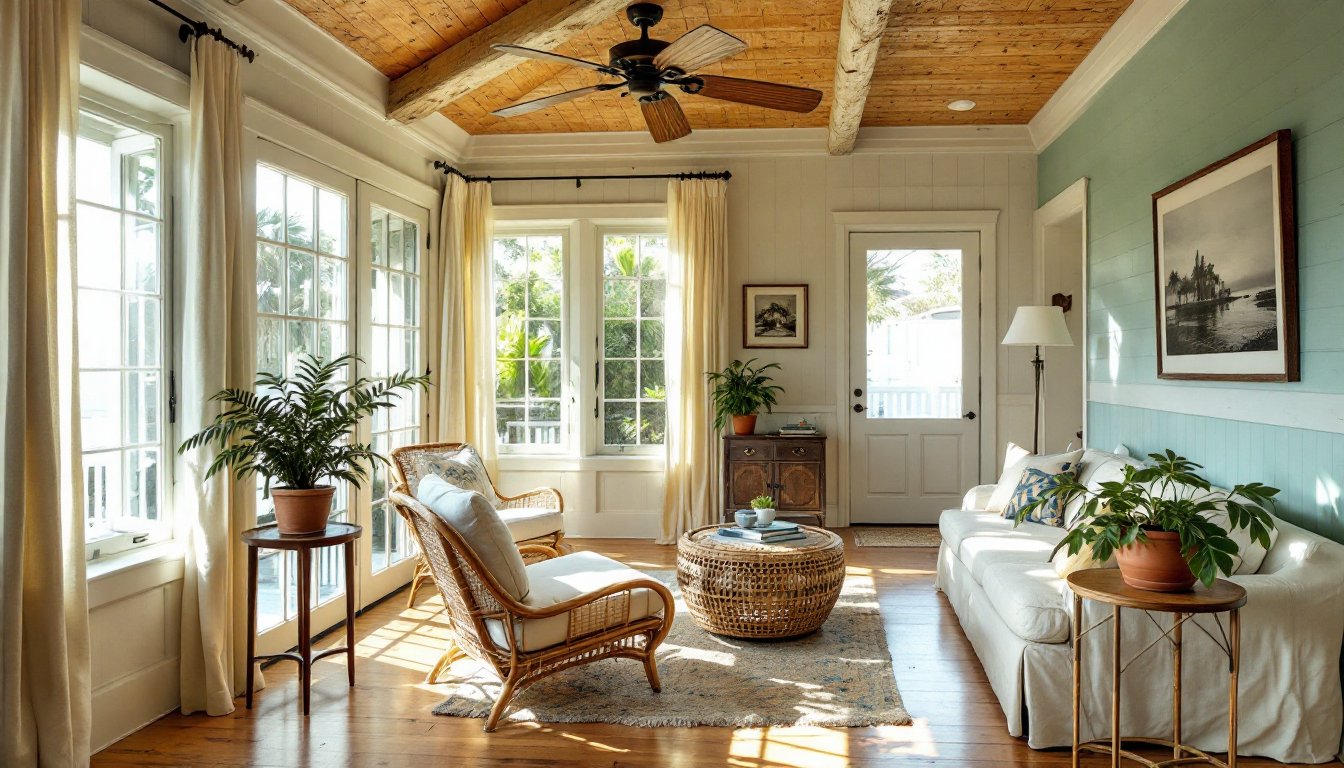
Old Florida style interior design pulls from the architectural heritage of pre-air-conditioning coastal homes built between the 1920s and 1950s. Think breezy Cracker cottages, tin-roofed fish camps, and Mediterranean Revival estates where cross-ventilation mattered more than central HVAC. This aesthetic isn’t about theme-park tropics or overdone nautical kitsch. It’s a grounded approach rooted in natural materials, practical layout choices, and colors borrowed from mangroves, sand, and sky. Homeowners drawn to this style appreciate its blend of laid-back comfort and architectural integrity, spaces that feel collected over time rather than decorated in a single shopping trip.
Old Florida style reflects the architectural and decorative choices made when builders designed for climate first and comfort second. Homes from this era featured high ceilings to let heat rise, wraparound porches for shade, and large operable windows positioned to catch Gulf and Atlantic breezes. Interiors were kept simple, using locally sourced materials like heart pine flooring, pecky cypress paneling, and coral stone.
The design language pulls from several regional influences. Spanish Colonial and Mediterranean Revival brought stucco walls, arched doorways, and decorative tile. Key West Conch style introduced gingerbread trim, metal roofs, and jalousie windows. Cracker architecture, named for Florida’s early cattlemen, favored raised floors, board-and-batten siding, and unfinished wood interiors that aged to a silvery patina.
Modern interpretations keep the bones, open floor plans, natural ventilation, durable surfaces, but swap out the mustiness. Homeowners might restore original terrazzo floors, add ceiling fans with cane blades, or install vintage-style casement windows while upgrading insulation and wiring to current code. The goal is a space that nods to Florida’s past without sacrificing livability.
Old Florida interiors avoid the glossy, resort-style finish common in newer coastal builds. Instead, surfaces show age gracefully. Wood develops a warm honey tone. Lime-washed walls pick up texture. Brass fixtures tarnish to a soft bronze. It’s a style that rewards patience and sourcing over speed and same-day delivery.
Old Florida interiors rely heavily on materials that handle humidity without warping or rotting. Heart pine and Dade County pine floors, both harvested from old-growth timber, offer dense grain and natural resistance to moisture. Reclaimed or salvaged boards are ideal: new heart pine costs $8–$12 per square foot but delivers unmatched character. Expect nominal 3/4-inch boards milled to 5/8-inch actual thickness.
Pecky cypress paneling, marked by small pockets left by fungus during growth, shows up on ceilings and accent walls. It’s lightweight, naturally rot-resistant, and finishes well with a clear satin poly or tung oil. Avoid heavy stains, they hide the wood’s natural variation.
Rattan, wicker, and cane furniture fits the era and climate. These materials breathe, keeping seats cooler than upholstered pieces. Look for solid construction, joints should be wrapped and glued, not just stapled. Vintage pieces often need re-caning: a skilled craftsperson charges $3–$6 per hole, but the result outlasts big-box imports.
Terrazzo floors, chips of marble or granite set in cement and polished smooth, were common in mid-century Florida homes. Restoration involves grinding with diamond pads (80 to 400 grit) and sealing with a penetrating sealer. Hire a pro for this: improper grinding creates uneven surfaces and exposes aggregate inconsistently.
Old Florida palettes draw from the environment, not a showroom paint deck. Soft whites and creams reflect heat and maximize natural light. Benjamin Moore’s “White Dove” or Sherwin-Williams’ “Alabaster” both work, though true period homes often used lime wash or whitewash that left a slightly chalky, breathable finish.
Aqua, seafoam, and pale turquoise show up as accents, shutters, trim, or a single statement wall. These colors reference shallow Gulf waters and worn beach glass. Keep saturation low: Old Florida blue-greens look faded, never electric.
Sandy beiges and taupes ground the palette. Use them on larger surfaces like plaster walls or sisal rugs. Pair with sun-bleached coral, muted terra cotta, or dusty sage pulled from mangrove roots and sea oats.
Dark wood tones, especially the amber-to-brown range of aged pine, provide contrast without heaviness. Avoid black or charcoal: they weren’t part of the original vocabulary and read too contemporary.
Ceilings often got painted a pale blue (“haint blue” in regional vernacular) to mimic sky and deter insects, though the pest-repelling claim is more folklore than fact. If using haint blue, apply it to porch ceilings rather than interior rooms for historical accuracy.
Start with architectural details that set the framework. If the home has drywall throughout, consider adding board-and-batten or shiplap paneling to one or two walls, not every surface. Use 1×6 or 1×8 pine boards (actual dimensions 3/4″ x 5-1/2″ or 3/4″ x 7-1/4″) with a nickel-gap spacing or traditional batten strips. Prime all sides before install to prevent cupping in humid climates. Fasten to studs with 2-inch finish nails and fill holes with wood filler, not spackle.
Replace solid-core doors with louvered or paneled versions that allow air circulation. Vintage doors can be sourced from salvage yards: check that hinge mortises align with standard 3-1/2″ butt hinges. If not, you’ll need to re-chisel or add shims, tedious work, but it preserves authenticity.
Ceiling fans are non-negotiable. Look for models with cane or woven blades and oil-rubbed bronze or aged brass finishes. A 52-inch fan works in rooms up to 225 square feet: go to 60 inches for larger spaces. Install on a fan-rated junction box, never a standard light box, and ensure downrods provide at least 7 feet of clearance from blades to floor per NEC guidelines.
Window treatments should be functional, not fussy. Matchstick blinds, bamboo shades, or simple linen panels in natural tones work best. Skip heavy drapes and pelmets. If privacy isn’t a concern, leave windows bare, it’s period-appropriate and maximizes breeze.
For flooring, if original wood isn’t present or salvageable, engineered hardwood in a wire-brushed or hand-scraped finish mimics aged pine without the cost of reclaimed lumber. Another option: polished concrete with a clear sealer, especially in kitchens or sunrooms. Stain it with iron sulfate for a variegated, earthy look.
Tile work offers another opportunity. Encaustic cement tiles in geometric patterns work for backsplashes or bathroom floors. Keep grout lines tight (1/16″ with rectified tile) and use unsanded grout to avoid scratching softer cement surfaces. Seal with a penetrating sealer after installation and reapply yearly in wet areas.
Lighting should feel utilitarian. Schoolhouse pendants, brass sconces, and pharmacy-style task lamps fit the era. Avoid Edison bulbs in exposed fixtures, they’re trendy, not traditional. Use warm white LEDs (2700K) in clear or frosted glass globes.
Old Florida style thrives on collected, not curated décor. Hit estate sales, architectural salvage yards, and online marketplaces for pieces with provenance. Look for rattan bar carts, cane-back chairs, and teak side tables from the ’40s through ’60s. Inspect joints and avoid anything with active mold or deep splits in the weave.
Botanical prints, especially vintage Florida flora and fauna illustrations, add regional character. Frame them simply in natural wood or thin brass frames. Avoid ornate gilt: it skews too formal.
Coral, shells, and driftwood work as accents, but use restraint. A single piece of staghorn coral on a bookshelf or a bowl of sand dollars beats a themed explosion of tchotchkes. If displaying coral, verify it was legally sourced: collection of live coral is prohibited under federal and state law.
Tropical plants bridge indoors and out. Pothos, philodendron, and Boston ferns tolerate indoor humidity and low light. Bird of paradise and areca palms need brighter spots near south-facing windows. Use simple terracotta or ceramic pots, no faux-distressed “coastal chic” planters.
Vintage maps, nautical charts, and black-and-white photography of old Florida, Key West in the ’30s, Miami Beach before the boom, add narrative without kitsch. Frame them in reclaimed wood or leave them unframed and pinned to cork or linen boards.
Textiles should be natural and breathable. Linen throws, cotton waffle-weave blankets, and jute or sisal rugs layer in texture without visual weight. Avoid synthetic fibers: they trap heat and feel wrong in a climate-driven design language.
Old Florida style isn’t about replicating a museum piece, it’s about adopting a design approach that respects climate, material honesty, and the slow accumulation of character. Focus on durable natural materials, breathable layouts, and restrained tropical touches. The result is a home that feels rooted in place, comfortable year-round, and built to age well rather than date quickly.
