Phone:
(701)814-6992
Physical address:
6296 Donnelly Plaza
Ratkeville, Bahamas.

Phone:
(701)814-6992
Physical address:
6296 Donnelly Plaza
Ratkeville, Bahamas.
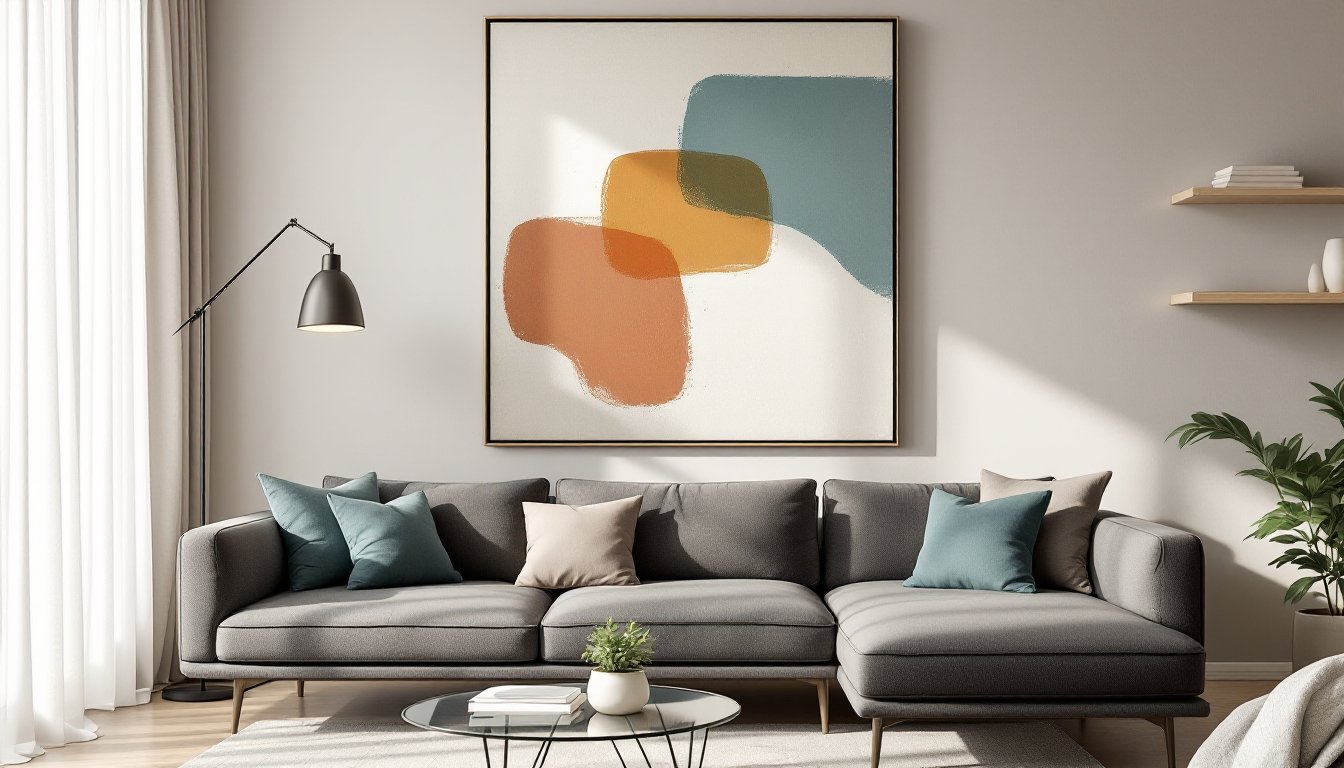
Choosing the right modern painting can turn a bland living room into a statement space without tearing down walls or refinishing floors. Unlike furniture or built-ins, art offers a low-commitment, high-impact way to establish mood, anchor a seating area, or introduce color without major construction. A well-chosen piece can tie together disparate design elements, mid-century chairs, contemporary shelving, neutral upholstery, and give the room a finished, intentional feel. This guide walks through the practical side of selecting, sizing, and placing modern paintings in living rooms, focusing on what actually works rather than vague styling advice.
Modern paintings suit living rooms because they’re designed to interact with architecture and furnishings rather than demand isolation. Unlike classical works that often require controlled lighting and formal framing, contemporary pieces tend to be more forgiving, they handle overhead lighting, open floor plans, and mixed materials like exposed brick or metal fixtures without clashing.
Living rooms typically feature large, uninterrupted wall surfaces between windows, over sofas, or flanking fireplaces. Modern art scales well to these dimensions. Oversized canvases (48″ × 60″ or larger) can fill a wall without competing visually with crown molding or wainscoting, which many contemporary homes lack anyway. The clean lines and bold compositions common in modern work complement open-concept layouts where the living room flows into dining or kitchen areas.
Another practical advantage: modern paintings offer flexibility in subject matter and palette. Abstract compositions, geometric patterns, and minimalist studies don’t carry the narrative baggage of traditional landscapes or portraits. That makes them easier to live with long-term and simpler to coordinate with evolving furniture or paint colors. A homeowner can repaint trim or swap out a rug without the artwork suddenly feeling mismatched.
From a functional standpoint, modern paintings are often produced on gallery-wrapped canvas with painted edges, eliminating the need for expensive custom framing. This cuts down on upfront cost and makes installation straightforward, two screws and picture wire, or a French cleat for heavier pieces over 30 pounds. No need to hire a professional unless the painting exceeds 100 pounds or requires museum-grade mounting hardware.
Understanding the dominant styles helps narrow choices and prevents decision paralysis at the gallery or online.
Abstract paintings use color, shape, and brushwork to create visual interest without representing recognizable objects. This style works well in living rooms with strong architectural features, floor-to-ceiling windows, exposed beams, or statement fireplaces, because it adds energy without competing for focal-point status. Abstract expressionist pieces with layered texture (palette knife work, thick impasto) introduce tactile variation in rooms dominated by smooth surfaces like drywall and laminate.
Geometric art relies on hard edges, repeating patterns, and structured compositions. Think color-blocked canvases, Op Art effects, or mid-century-inspired grids. Geometric work pairs naturally with modern furniture, platform sofas, angular coffee tables, linear shelving. It’s also easier to align visually: the straight lines in the painting can echo windowsills, door frames, or the edges of built-in cabinetry, creating a cohesive sight line.
Both styles scale up effectively. A 60″ × 72″ abstract can dominate a wall above a sectional sofa, while a set of three 24″ × 24″ geometric prints can fill a narrow wall between doorways without overwhelming the space.
Minimalist paintings strip composition down to essential elements, a single brushstroke, a color field, a subtle gradation. These work best in living rooms where the homeowner wants art to provide calm rather than stimulation. Rooms with busy patterns (patterned rugs, textured upholstery, gallery walls of family photos) benefit from minimalist anchors that give the eye a place to rest.
Monochromatic pieces limit the palette to variations of a single hue or stay within neutral tones (grays, blacks, whites, beiges). They’re practical for homeowners who redecorate frequently, since a charcoal-and-white painting won’t clash when throw pillows go from navy to olive. Monochromatic work also hides imperfections in lighting: uneven illumination that might make a bright red painting look splotchy won’t affect a tonal gray study.
One caution: minimalist and monochromatic styles rely heavily on surface quality and framing. A $50 print on thin canvas will look cheap: invest in stretched canvas at minimum thickness of 1.5 inches for gallery-wrapped edges, or opt for museum-quality paper behind glass if going the print route.
Start with the room’s existing palette and materials. Pull paint chips, fabric swatches from cushions, and photos of flooring. Lay them out under the same lighting conditions the painting will experience, overhead LEDs, table lamps, natural light from windows. A painting that looks balanced in a gallery under track lighting can read completely different under warm incandescent bulbs at home.
Identify the room’s undertones. Cooler grays and blues call for artwork with similar temperature, or go for intentional contrast with warm ochres and burnt oranges. Warmer beiges and wood tones pair naturally with earth-tone palettes, terracotta, olive, rust. Mismatched undertones (cool art in a warm room) create visual tension that reads as “off” even if the specific colors seem compatible.
Consider the room’s function and traffic flow. A high-energy abstract with jagged shapes and saturated reds might energize a media room but feel agitating in a space meant for conversation and reading. Paintings hung along hallways or near doorways should avoid delicate details that won’t be appreciated in passing: bold, graphic compositions work better.
Assess the competition for visual attention. If the living room already has a statement fireplace, a dramatic light fixture, or a view through large windows, the painting should complement rather than compete. A quieter piece in a supporting role often works better than trying to cram two focal points onto one wall.
Finally, consider longevity and resale. Trendy styles date quickly. A painting that leans heavily into a specific color trend (like the millennial pink wave of the late 2010s) may feel stale in three years. Stick with compositions and palettes that have multi-decade appeal if the goal is a long-term investment.
Undersized art is the most common mistake. A 24″ × 36″ painting centered over an 84″ sofa looks lost. Aim for artwork that spans two-thirds to three-quarters the width of the furniture below it. For a standard three-seat sofa (roughly 84″ wide), that means a single piece between 56″ and 63″ wide, or a multi-panel arrangement totaling that span.
Hanging height matters as much as size. The center of the painting should sit at 57″ to 60″ from the floor, standard gallery height, which aligns with average eye level. In rooms with seating, some designers drop this to 54″ so the art relates better to seated sight lines. Measure from the floor to the intended center point, then calculate hook placement by measuring from the painting’s center to the wire or hanging bracket when pulled taut.
For above-sofa placement, leave 6″ to 10″ of clearance between the sofa back and the bottom edge of the frame. Less than 6″ feels cramped: more than 10″ creates a visual disconnect, making the art feel like it’s floating unrelated to the furniture.
Multi-panel installations (diptychs, triptychs, or gallery walls) require consistent spacing. Use 2″ to 3″ gaps between panels for a cohesive look. Lay the arrangement out on the floor first, measure the overall footprint, then mark the wall with painter’s tape before committing to holes. For panels totaling more than 40 pounds combined, install wall anchors rated for the combined weight, toggle bolts in drywall, screws into studs where possible.
In rooms with vaulted or high ceilings (10 feet or more), resist the urge to hang art too high just because there’s wall space. Keep the 57″–60″ guideline unless creating an intentional floor-to-ceiling installation with multiple pieces stacked vertically.
Avoid placing paintings where they’ll be hit by direct sunlight for extended periods. UV exposure fades pigments, especially in inkjet prints or watercolor-based work. If the only good wall gets afternoon sun, use UV-filtering acrylic glazing or rotate the piece seasonally.
Pull one or two accent colors from the painting and echo them in throw pillows, blankets, or smaller décor items. This creates visual rhythm without requiring a full remodel. If the painting features a bold teal, add a single teal lumbar pillow to the sofa. Overdoing it, matching every color in a multi-hue abstract, looks forced and flat.
Use the 60-30-10 rule adapted for art. In a room where walls are the dominant neutral (60%), upholstery and rugs provide secondary color (30%), and the painting can introduce the accent punch (10%). This keeps the artwork feeling integrated rather than like an afterthought added to an already-complete room.
Neutral-dominant rooms (grays, whites, beiges) offer the most flexibility. A painting can go vivid, saturated yellows, cobalt blues, fiery reds, without clashing. Conversely, if walls and furniture already carry strong color, a monochromatic or neutral-toned painting prevents the room from feeling chaotic.
Pay attention to finish and sheen. Matte-finish paintings pair well with flat or eggshell wall paint and natural-fiber textiles (linen, cotton). High-gloss or resin-coated pieces complement rooms with lacquered furniture, metallic accents, or semi-gloss trim. Mixing finishes arbitrarily can make the space feel unresolved.
Test colors in context before buying. Many galleries and online retailers allow returns, but it’s worth requesting a photo of the specific piece in similar lighting if purchasing remotely. Phone and monitor screens distort color, especially reds and purples, so confirm the actual pigment before committing to a large investment.
Modern paintings offer one of the most flexible, reversible ways to define a living room’s character. Get the size right, respect the existing palette, and the art will do the heavy lifting without requiring a single cut or fastener beyond a couple of picture hooks.