Phone:
(701)814-6992
Physical address:
6296 Donnelly Plaza
Ratkeville, Bahamas.

Phone:
(701)814-6992
Physical address:
6296 Donnelly Plaza
Ratkeville, Bahamas.
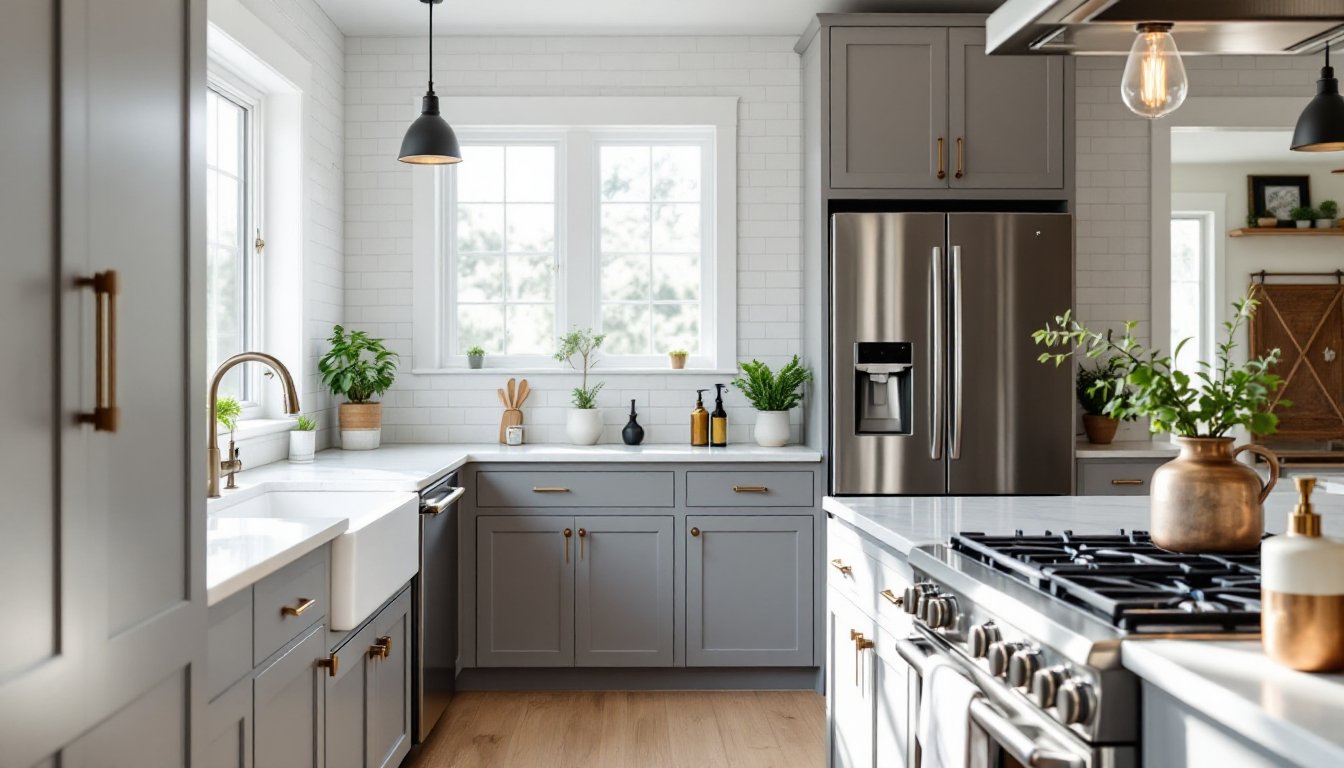
Gone are the days when every knob, faucet, and light fixture had to match perfectly. Mixing metals has become one of the most effective ways to add depth, character, and a collected-over-time feel to a home’s interior. When done right, combining brass, chrome, matte black, bronze, and nickel creates visual interest that a single-finish room can’t touch. But it’s not as simple as grabbing whatever’s on sale at the home center. The difference between a space that feels intentionally curated and one that looks haphazard comes down to understanding proportion, distribution, and finish compatibility. This guide breaks down exactly how to mix metals without second-guessing every hardware choice.
The monochromatic metal trend, where every finish in a room matched, made spaces feel flat and dated. Real homes accumulate pieces over time, and mixing metals reflects that authentic, layered aesthetic.
From a design standpoint, contrasting metal finishes create visual breaks that guide the eye around a room. A brass pendant over a kitchen island with brushed nickel cabinet pulls and matte black faucets gives each element its moment instead of blending into monotony. The interplay between warm tones (brass, gold, copper, bronze) and cool tones (chrome, nickel, stainless steel) adds dimension that paint and texture alone can’t achieve.
Mixing metals also provides flexibility during renovations. Homeowners don’t need to replace every fixture when updating a single element, existing finishes can stay if they’re balanced with intentional new choices. It’s a practical approach that saves money and reduces waste, especially when working with structurally sound but aesthetically mismatched hardware.
The trend aligns with broader shifts toward eclectic, personalized interiors. Designers increasingly favor spaces that feel collected rather than catalog-ordered, and metal mixing supports that philosophy without requiring custom fabrication or high-end materials.
Three core principles keep mixed-metal spaces looking intentional: proportion, repetition, and temperature balance.
Proportion means establishing a dominant metal that covers roughly 60-70% of visible finishes in a space. This anchor prevents the room from feeling chaotic. The remaining 30-40% gets divided among one or two accent metals. In a bathroom, for example, brushed nickel might dominate through the faucet, towel bars, and shower fixtures, while oil-rubbed bronze appears on cabinet hardware and matte black shows up in the mirror frame.
Repetition ensures each metal appears at least twice in a room, ideally in different zones. A single brass sconce surrounded by all chrome reads as a mistake, not a design choice. That same brass sconce paired with brass drawer pulls across the room signals intention. Spacing repetitions out, rather than clustering them, creates better visual flow.
Temperature balance addresses the warm-cool spectrum. Mixing all warm metals (brass, gold, copper) or all cool metals (chrome, stainless, polished nickel) is safer for beginners. Combining warm and cool requires more care but offers the most dynamic results. A good starting point: pair one warm and one cool metal, then use a neutral finish like matte black or brushed nickel to bridge them.
The dominant metal should tie into the room’s overall color palette and existing fixtures. In kitchens with stainless steel appliances, brushed stainless or chrome makes sense as the anchor, it’s already present in significant mass. In spaces with warm wood tones or terracotta tiles, aged brass or bronze complements better.
Consider maintenance, too. Polished metals show fingerprints and water spots: oil-rubbed bronze hides wear but can look heavy in small doses. Matte black is having a moment but scratches more visibly than satin finishes. The dominant metal gets the most exposure, so choose one that fits both the aesthetic and the household’s cleaning tolerance.
Finally, think about permanence. Plumbing fixtures are harder to swap than cabinet hardware. If the shower valve is polished chrome, that’s likely staying dominant unless there’s budget for a full bathroom gut. Build the accent metals around what’s structurally committed.
Different design styles favor specific metal pairings based on their historical and aesthetic roots.
Modern and contemporary spaces lean into high contrast: matte black with polished chrome, or brushed nickel with unlacquered brass. The key is clean lines and distinct finishes that don’t muddy each other. Avoid antiqued or distressed metals here, they fight the streamlined aesthetic.
Transitional and farmhouse styles do well with aged brass, oil-rubbed bronze, and brushed nickel. These finishes have enough patina variation to feel lived-in without tipping into rustic territory. Mixing warm bronze hardware with a nickel faucet on a farmhouse sink is a classic combination.
Industrial interiors call for raw, utilitarian finishes: blackened steel, gunmetal, and galvanized or stainless steel. Copper piping, real or decorative, adds warmth without softening the edge. Avoid shiny or ornate finishes: the appeal is in the unfinished, workshop vibe.
Traditional and classic rooms handle mixed metals through layering rather than contrast. Polished brass with antique gold, or polished nickel with chrome, keeps the palette cohesive while adding subtle depth. Ornate backplates and decorative details work here in ways they don’t in minimalist spaces.
Eclectic and maximalist styles have the most freedom but still benefit from one unifying metal. Even when mixing four or five finishes, keeping one dominant prevents the space from fragmenting visually. This is where unexpected pairings, rose gold with pewter, or copper with matte black, can shine if repeated deliberately.
Kitchens are the easiest rooms to mix metals because they naturally contain multiple fixture types. Start with appliances as the baseline, if they’re stainless, that’s the dominant cool tone. Add brass or gold cabinet hardware for warmth, then bring in a matte black or bronze faucet as the bridge. Light fixtures over the island offer another opportunity for contrast. Keep the sink accessories (soap dispenser, pot filler) in the same family as the faucet to avoid overcrowding the wet zone with competing finishes.
Bathrooms benefit from restraint. With limited square footage, three metals is the maximum before it feels busy. A common formula: dominant brushed nickel on the faucet and shower, matte black mirror frames or sconces, and brass or bronze cabinet pulls. If there’s a freestanding tub with exposed plumbing, that fixture often dictates the dominant metal due to its visual weight and cost to replace.
Living rooms and bedrooms mix metals through lighting, furniture legs, and decorative accessories rather than fixed hardware. Floor lamps, picture frames, curtain rods, and furniture accents give flexibility to experiment. A brass floor lamp pairs well with an iron bed frame and chrome table lamps as long as each finish appears elsewhere, brass in drawer pulls, iron in wall art, chrome in a mirror trim.
Entryways are high-impact, low-commitment spaces. Door hardware (levers, deadbolts, hinges) should match for code compliance and visual coherence, but the nearby console table legs, mirror frame, and pendant light can introduce accent metals. Just ensure the door hardware metal repeats somewhere nearby, in a coat hook, house numbers, or mailbox, so it doesn’t feel isolated.
The biggest error is using too many finishes in one sightline. If standing in a bathroom doorway reveals chrome, brass, nickel, copper, and black all at once, the eye doesn’t know where to land. Stick to two or three metals per view, even if the full room contains more when looking in different directions.
Ignoring undertones causes clashes that feel off even when the right metals are chosen. Brass comes in shades from yellow-gold to rose to greenish, mixing cool-toned brushed brass with warm antique brass can look muddled. When sampling, view finishes together under the room’s actual lighting, not just the showroom’s LEDs.
Skipping the transition metal is a mistake in rooms with strong warm-cool contrast. Matte black, gunmetal, or oil-rubbed bronze act as neutrals that help disparate finishes coexist. Without that buffer, a shiny chrome faucet next to shiny brass pulls can feel jarring.
Treating all metals equally instead of establishing hierarchy flattens the design. If every metal gets equal real estate, nothing stands out. Let one dominate, let one accent, and if there’s a third, use it sparingly as punctuation.
Finally, forgetting about the room’s existing metals, vent covers, outlet plates, door hinges, creates accidental clutter. Switching out a few outlet covers and air registers to match the dominant or accent metal is cheap and makes a noticeable difference. It’s a detail contractors skip, but it tightens the whole look.
Mixing metals isn’t about memorizing rigid formulas, it’s about understanding proportion, repetition, and how finishes interact across a space. Start with a dominant metal tied to existing fixtures, add one or two accents that appear at least twice, and use a neutral finish to bridge warm and cool tones when needed. The result is a home that feels layered, intentional, and far more interesting than the matchy-matchy approach ever delivered.
