Phone:
(701)814-6992
Physical address:
6296 Donnelly Plaza
Ratkeville, Bahamas.

Phone:
(701)814-6992
Physical address:
6296 Donnelly Plaza
Ratkeville, Bahamas.
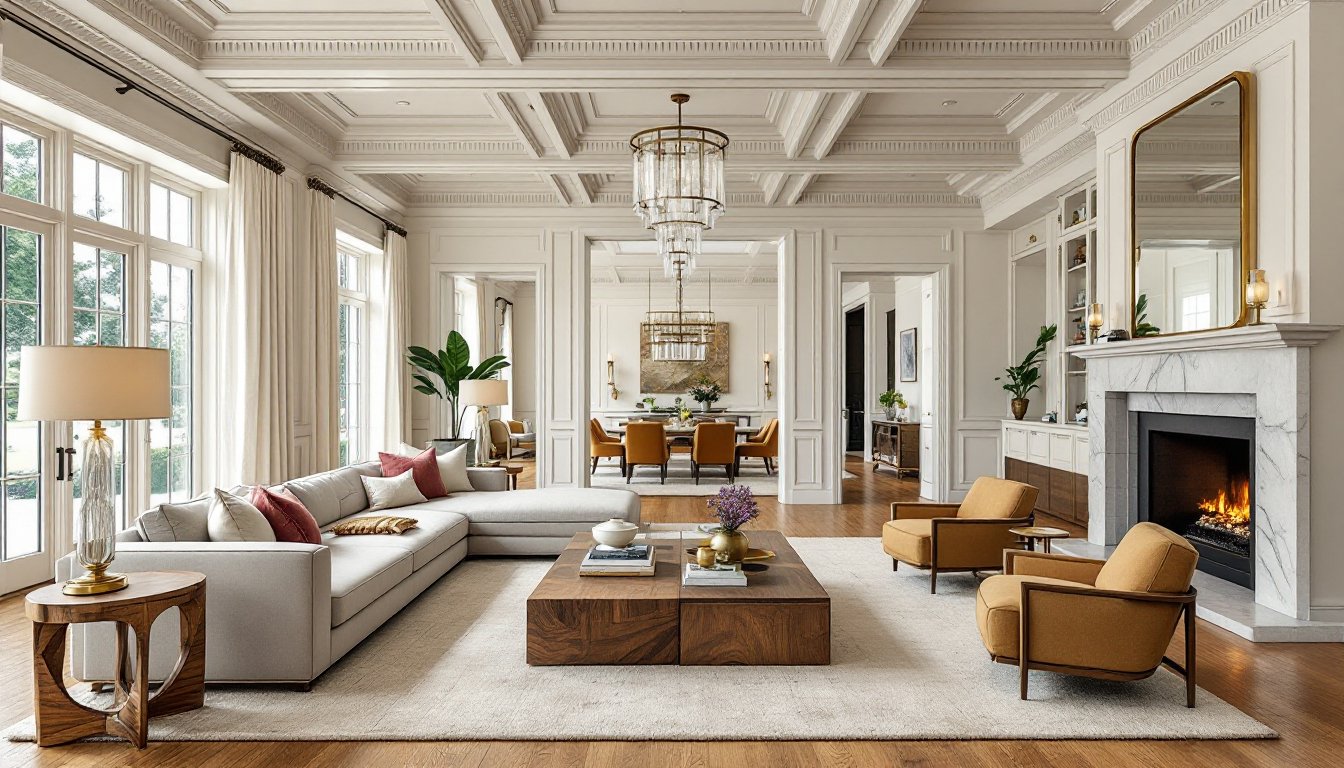
Designing a mansion isn’t just about scaling up a regular house, it’s about orchestrating hundreds of decisions that turn sprawling square footage into something that feels intentional, not empty. Unlike standard residential design, mansion interiors demand a different approach: one that solves the challenge of making grand spaces feel lived-in while maintaining the visual drama that luxury homes deserve. From selecting finishes that work across 20-foot ceilings to ensuring a dozen rooms don’t feel like a furniture showroom, mansion interior design requires both vision and technical know-how. This guide breaks down the principles, styles, and material choices that separate impressive estates from cold, oversized houses.
Mansion interior design operates at a different scale than typical residential work. It’s characterized by high ceilings (often 12–20 feet in main living areas), multiple specialized rooms beyond the standard bedroom-bath layout, and architectural features like coffered ceilings, crown molding exceeding 8 inches, custom millwork, and grand staircases that serve as focal points.
The technical challenge lies in proportion. A sofa that feels substantial in a 14×18-foot living room disappears in a 30×40-foot great room. Lighting designed for 8-foot ceilings won’t adequately illuminate spaces with 16-foot heights. Designers must account for sightlines that extend 40+ feet, where color shifts and finishes need to read cohesively from multiple vantage points.
Mansion interiors also typically include dedicated-function spaces uncommon in average homes: libraries with built-in shelving systems, wine cellars with climate control, home theaters with acoustic treatments, formal dining rooms seating 12+, and multi-room primary suites. Each requires specialized design considerations, from HVAC zoning to accommodate a wine cellar’s temperature needs to acoustic panels that don’t sacrifice aesthetics in a theater.
The square footage alone demands a design strategy. Homes exceeding 8,000–10,000 square feet can’t rely on a single design concept applied uniformly. Successful mansion design employs layered approaches: perhaps modern minimalism in public entertaining areas, warmer traditional elements in private family spaces, and functional luxury in service areas like mudrooms and butler’s pantries.
Maintaining visual continuity across 15+ rooms requires deliberate repetition without monotony. Designers typically establish a core material palette, three primary finishes that appear throughout the home. This might include a specific hardwood species (like rift-sawn white oak), a neutral stone (Calacatta marble or honed limestone), and a metal finish (brushed nickel or oil-rubbed bronze). These anchor materials appear in different applications room to room: the oak as flooring in living areas, cabinetry in the kitchen, and paneling in the study.
Color strategy matters more in large homes. A common approach uses a neutral base (warm whites, soft grays, or beiges) for primary spaces, reserving bolder accent colors for smaller rooms or feature walls. This prevents color fatigue when moving through multiple spaces and allows artwork or furnishings to provide visual interest.
Architectural details should follow a consistent language. If the entry hall features 8-inch crown molding with dentil detailing, other formal spaces should echo that scale and style, even if simplified. Abrupt shifts, say, contemporary flat-panel doors next to traditional raised-panel wainscoting, create jarring transitions unless intentionally designed as threshold moments between distinct zones.
The biggest mistake in mansion design is treating every space like a showroom. Grand volumes work in entries, galleries, and formal living rooms where visual impact matters. But spaces meant for actual living, family rooms, breakfast nooks, bedrooms, need human scale.
Furniture arrangement becomes a zoning tool. In a 600-square-foot great room, create multiple seating clusters rather than one massive U-shaped sectional. Each cluster (a sofa and two chairs around a coffee table, a pair of reading chairs by a window) functions as a room-within-a-room, making the larger space approachable.
Ceiling treatments help lower perceived height without structural changes. Coffered ceilings, exposed beams, or decorative plaster work draws the eye horizontally and breaks up vast expanses. In bedrooms, consider a tray ceiling where the perimeter drops 12–18 inches while the center remains full height, it creates an intimate feeling overhead while preserving volume.
Lighting layering is critical. Chandeliers and statement fixtures provide ambient light and visual drama in tall spaces, but table lamps, sconces, and floor lamps at human height (5–6 feet) create warmth and intimacy. A 20-foot-tall room lit only by recessed cans feels institutional: add task lighting and you’ve got livability.
Modern Transitional dominates high-end residential design in 2026. It blends clean-lined contemporary furniture with traditional architectural details, think shaker-style cabinetry paired with quartz waterfall islands, or coffered ceilings above minimalist sectionals. The style works well in mansions because it allows classical architectural bones (moldings, paneling, symmetry) while keeping furnishings and palettes current.
European Classicism remains strong for traditionally oriented buyers, particularly those drawn to French Provincial or Italian villa aesthetics. Expect plaster walls with subtle texture, limestone or reclaimed terra cotta flooring, antique or antique-reproduction furniture, and ornate plaster ceiling medallions. This style demands skilled tradespeople, authentic lime plaster or Venetian plaster application isn’t DIY-friendly and requires professionals experienced in old-world techniques.
Organic Modern has gained traction among younger luxury homeowners. The style emphasizes natural materials (live-edge wood, stone, linen, wool), neutral earth-tone palettes, and sculptural organic forms. It works particularly well in mansions with strong indoor-outdoor connections, floor-to-ceiling glass walls, courtyards, or mountain/coastal settings where bringing landscape materials inside feels natural.
Art Deco Revival is seeing renewed interest, especially in urban mansions or penthouse-style luxury properties. Expect geometric patterns, rich jewel tones (emerald, sapphire, deep amber), mixed metals (brass and chrome), and luxe materials like shagreen, lacquer, and marble. The style’s inherent glamour suits entertaining spaces, bars, formal dining rooms, and powder rooms.
Certain rooms carry outsized design weight in luxury homes. The entry hall or foyer sets expectations, it’s where first impressions form. Budget for statement flooring (marble mosaics, intricate wood inlays, or oversized-format stone), dramatic lighting (a chandelier scaled to ceiling height, typically 1 inch of diameter per foot of ceiling height), and millwork details that establish the home’s design language.
The primary suite in a mansion functions as a multi-room experience: bedroom, sitting area, dual bathrooms, closets (often room-sized walk-ins), and sometimes private balconies or terraces. Design these as a cohesive retreat distinct from public areas. Expect to specify spa-grade finishes in bathrooms, soaking tubs (60+ inches), frameless glass showers with body jets and rain heads, heated floors, and high-end stone throughout.
A chef’s kitchen demands professional-grade equipment and proportional scale. Cooktops with 6+ burners, dual ovens, 48-inch refrigeration, and expansive prep islands (10+ feet long) are standard. But equally important: adequate task lighting (under-cabinet LED strips, pendant lights over islands at 30–36 inches above the counter), and durable work surfaces, quartzite or granite that can handle hot pans, unlike more delicate marbles.
Libraries or studies in mansions often feature custom floor-to-ceiling built-ins. If designing these, work with a finish carpenter who can detail proper shelf spacing (typically 10–12 inches for most books, 14–16 inches for oversized volumes) and integrate ladder hardware if shelves exceed 8 feet. Specify hardwoods like cherry, walnut, or painted poplar: avoid softwoods that sag under book weight.
Material selection separates competent mansion design from exceptional work. Hardwood flooring should be at least 3/4-inch solid or engineered with a 1/4-inch wear layer, anything thinner looks cheap at scale. Wide planks (7–10 inches) read more luxurious than narrow strips. Rift and quarter-sawn cuts offer superior stability and consistent grain patterns across large installations.
For stone surfaces, book-matching slabs creates visual drama in feature applications like fireplace surrounds or shower walls. Book-matching means adjacent slabs are cut from the same block and mirrored, creating symmetrical veining. It requires ordering and planning before fabrication, not something to improvise mid-project. Expect to pay 30–50% premiums for book-matched installations.
Wall treatments go beyond paint in luxury homes. Consider: Venetian plaster (requires skilled applicators, budget $8–15 per square foot for labor alone), decorative molding and paneling systems (raised panels, board-and-batten, picture frame molding), grasscloth or silk wallcoverings (especially in powder rooms or formal dining), and limewash for textured, matte finishes in European-inspired designs.
Lighting fixtures should be proportionally scaled. A dining table seating 12 might measure 48 inches wide by 120+ inches long, the chandelier above should be roughly one-third to one-half the table width (16–24 inches) and scaled for ceiling height. In two-story entry halls, oversized fixtures (36+ inches diameter) prevent the space from feeling under-lit or visually top-heavy.
Don’t overlook hardware and plumbing fixtures. Inconsistent finishes across 8+ bathrooms look sloppy. Select a primary finish (polished nickel, unlacquered brass, matte black) and apply it throughout. Quality matters, solid brass or stainless construction versus zinc alloy. The difference is weight, durability, and how finishes age. Cheap hardware shows wear within months in high-use areas.
