Phone:
(701)814-6992
Physical address:
6296 Donnelly Plaza
Ratkeville, Bahamas.

Phone:
(701)814-6992
Physical address:
6296 Donnelly Plaza
Ratkeville, Bahamas.
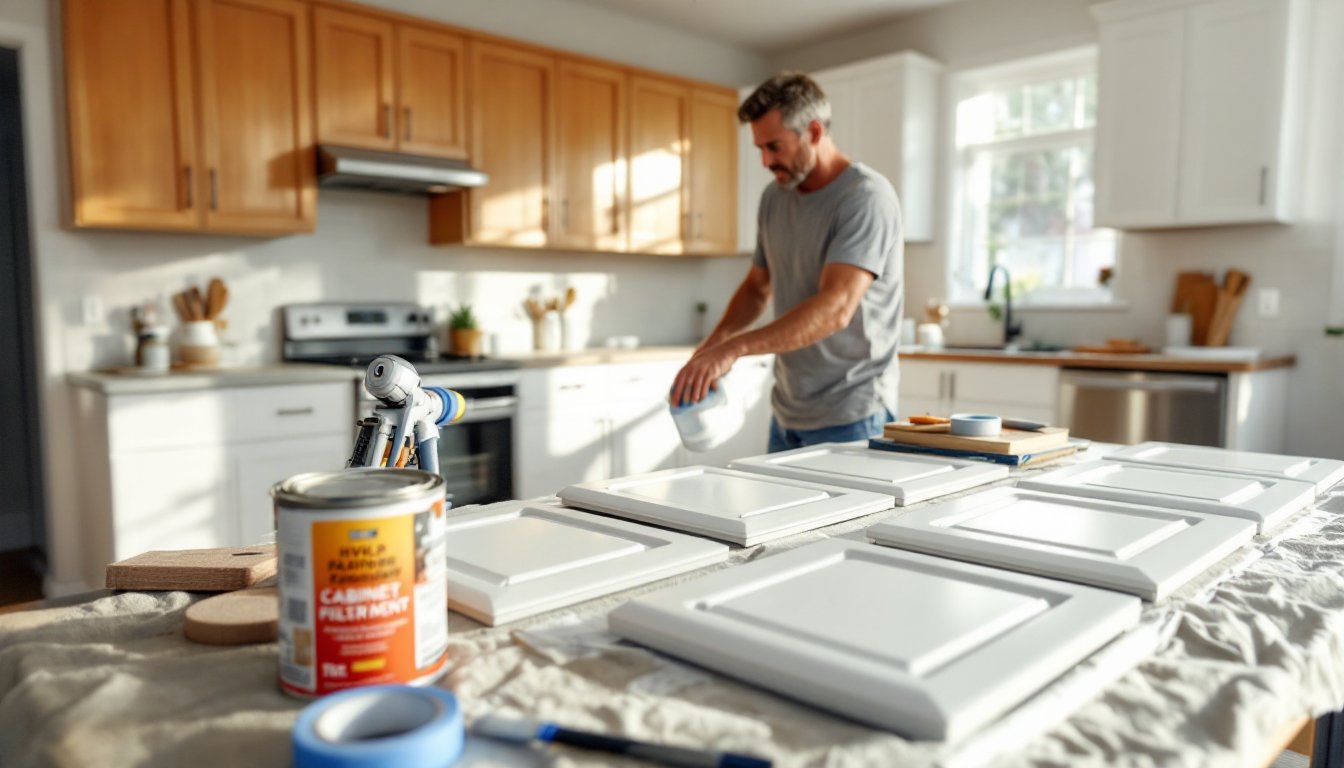
Painting kitchen cabinets is one of the highest-impact, lowest-cost kitchen upgrades a homeowner can tackle. Instead of spending $15,000–$40,000 on full cabinet replacement, a fresh coat of paint can transform dated oak or builder-grade maple for a fraction of that price. But costs vary widely depending on kitchen size, cabinet condition, and whether the homeowner picks up a brush or hires a pro. This guide breaks down what to expect in 2026, from materials and labor to hidden expenses and money-saving strategies that don’t cut corners.
Nationally, painting kitchen cabinets ranges from $800 to $7,000 depending on kitchen size, cabinet complexity, and who does the work. Most homeowners pay around $2,500 to $4,500 for a professional job on a standard 10×12 kitchen with 20–25 cabinet doors and drawer fronts.
DIY projects typically cost $200–$600 in materials alone, assuming the homeowner already owns basic tools like a paint sprayer or quality brushes. Professional cabinet painters charge $30–$100 per door and drawer front, or $3,000–$8,000 for full kitchens with prep, priming, and multiple topcoats.
Condition matters. Cabinets needing significant repairs, split panels, water damage, or laminate delamination, can push costs higher. Smooth, solid-wood cabinets in good shape are the easiest and cheapest to paint.
Small kitchen (10×10 or fewer cabinets):
Medium kitchen (10×12 to 12×14, 20–30 doors/drawers):
Large kitchen (12×16+, 30–40+ doors/drawers):
Two-tone kitchens (island in a contrasting color, for example) add 10–20% to professional costs due to extra masking, color changes, and cleanup between coats.
DIY cabinet painting saves on labor but demands time, patience, and attention to detail. Expect to invest 30–50 hours for a medium kitchen, spread over several days to allow for drying time between coats.
DIY cost range: $200–$600
Includes deglosser or TSP, primer, paint (typically 1–2 quarts of primer and 1–2 quarts of topcoat for a small to medium kitchen), brushes or sprayer tips, sandpaper (120- and 220-grit), painter’s tape, drop cloths, and hardware. Homeowners who already own a HVLP sprayer or quality angled trim brushes save $50–$150.
Professional cost range: $1,200–$7,000+
Pros bring speed, expertise, and commercial-grade equipment. Most include removal, labeling, and reinstallation of doors and hardware, thorough degreasing and sanding, spray application of two coats of primer and two to three topcoats, and cleanup.
Professional jobs typically finish in 3–5 days, compared to 1–2 weeks for a DIYer working evenings and weekends. Hiring out makes sense when cabinets have intricate profiles, raised panels, or glass inserts that complicate spraying and masking.
When to hire a pro:
Cabinet material: Solid wood (maple, oak, cherry) takes paint well and costs less to prep. Laminate or thermofoil cabinets require specialty bonding primers and light sanding to ensure adhesion, adding $200–$500 in material and labor. MDF cabinets need careful attention to edges, which soak up paint unevenly.
Cabinet condition: Grease buildup, smoke residue, and worn finishes require extra degreasing and sanding. Pros may charge $200–$800 more for heavy prep. Doors with water damage or delaminating veneer may need replacement before painting.
Paint type: Latex-acrylic hybrids (like Benjamin Moore Advance or Sherwin-Williams Emerald Urethane) cost $50–$70 per quart but offer durability and smooth leveling. Oil-based paints (rare now due to VOC regulations) cost slightly less but require mineral spirits for cleanup and longer dry times. Chalk or milk paint runs $35–$50 per quart but often needs a topcoat sealer.
Number of doors and drawers: Labor scales with count, not just square footage. A kitchen with many small drawers costs more per linear foot than one with fewer, larger doors.
Finish complexity: Glazing, distressing, or two-tone finishes add $500–$1,500 to professional quotes. Each additional color requires separate masking and application.
Geographic location: Metro areas with higher costs of living see cabinet painters charging $50–$100 per door. Rural markets may run $30–$60 per door. Always get three quotes.
Materials (DIY, medium kitchen):
Professional labor:
Most pros charge per door/drawer or by linear foot. Per-door pricing ranges $30–$100 and typically includes all materials. Hourly rates (less common) run $40–$75/hour, with a medium kitchen taking 25–40 hours of combined prep, application, and reinstallation.
Common add-ons:
Always ask for an itemized quote showing materials, labor, prep work, and number of coats.
Do the prep yourself. Removing doors, cleaning, and light sanding can cut $300–$800 off professional quotes. Label each door with painter’s tape and a number corresponding to its hinge location, it saves hours during reinstallation.
Skip the cabinet boxes. Painting only doors, drawer fronts, and face frames, not the interior boxes, saves 20–30% on materials and labor. Most box interiors aren’t visible with doors closed.
Use existing hardware. New pulls and knobs add $50–$300 depending on count and style. Clean and spray-paint existing hardware with Rust-Oleum Universal Metallic ($6/can) for a fresh look at minimal cost.
Choose a single color. Two-tone kitchens look sharp but require extra masking and separate batches of paint. Sticking with one color shaves $200–$600 off pro quotes.
Buy paint during sales. Many paint retailers run 20–40% off sales around holidays. A quart of premium cabinet paint drops from $65 to $40–$50.
Rent an HVLP sprayer. Home centers rent them for $40–$60/day. A sprayer delivers a smoother finish than brushes or rollers, and most medium kitchens can be sprayed in a single weekend if doors are removed.
Leave face frames installed. Painting face frames in place (carefully masked) is faster than removing them, and avoids the risk of cracking old glue joints during disassembly.
Painted cabinets deliver one of the highest returns in kitchen remodeling. A $3,000 cabinet paint job can make a kitchen feel $20,000 newer without the cost or disruption of a full remodel.
Resale value: According to Remodeling Magazine’s 2026 Cost vs. Value Report, minor kitchen updates (including cabinet painting) recoup 70–85% of cost at resale in most markets. Fresh, neutral-colored cabinets appeal to buyers who want move-in-ready homes.
Lifespan: Properly prepped and painted cabinets last 5–10 years with normal use before needing a refresh. High-wear areas (around the sink, dishwasher, and stove) may show scuffs sooner. Using a durable acrylic-urethane topcoat extends longevity.
Best ROI candidates:
When replacement makes more sense:
Painting kitchen cabinets won’t fix functionality issues like awkward corner cabinets or insufficient storage. But for cosmetic updates, it’s hard to beat the bang-for-buck. Homeowners who invest in quality prep and materials, whether DIY or professional, end up with a kitchen that looks custom for a budget-friendly price.