Phone:
(701)814-6992
Physical address:
6296 Donnelly Plaza
Ratkeville, Bahamas.

Phone:
(701)814-6992
Physical address:
6296 Donnelly Plaza
Ratkeville, Bahamas.
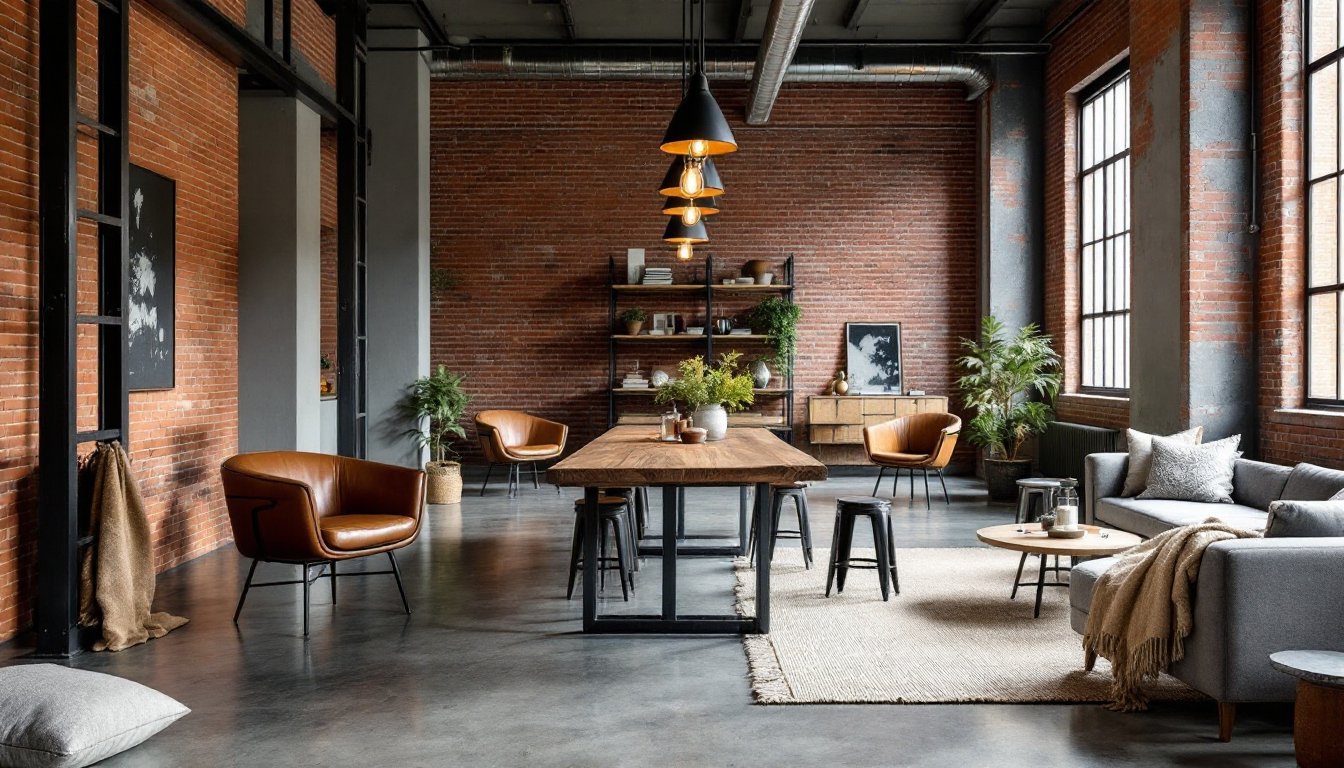
Industrial modern rustic interior design mixes the unfinished honesty of warehouses with the organic warmth of reclaimed wood and lived-in textures. It’s a style that doesn’t apologize for exposed brick or steel beams but softens them with natural materials and earthy tones. This approach works equally well in urban lofts and suburban homes, anywhere someone wants a space that feels both grounded and a little rebellious. Unlike purely industrial interiors that can read cold, or rustic designs that veer into cabin territory, this blend creates rooms that feel authentically layered. The result: spaces with character that don’t sacrifice comfort.
Industrial modern rustic design is a hybrid aesthetic that borrows raw, utilitarian elements from industrial spaces, think exposed ductwork, metal fixtures, and concrete surfaces, and tempers them with the warmth of rustic materials like reclaimed wood, natural stone, and textured textiles. It’s not about recreating a factory or a farmhouse but finding the tension between the two.
The “modern” piece keeps things from feeling like a period costume. Clean lines, minimal clutter, and intentional negative space prevent the style from becoming too busy or nostalgic. A room done well in this style might feature steel I-beams alongside wide-plank oak floors, or an Edison bulb pendant over a live-edge dining table. The materials do the talking: the layout stays disciplined.
This style appeals to homeowners who want a lived-in, authentic look without sacrificing function. It’s forgiving, imperfections in wood grain or weld marks add to the aesthetic rather than detract from it. That makes it accessible for DIYers willing to work with salvaged materials or leave structural elements visible rather than covering them up.
Nailing this aesthetic comes down to material choices and color discipline. Get those right, and the style practically assembles itself.
The foundation of industrial modern rustic design is a deliberate mix of hard and soft materials. On the industrial side, that means black steel, galvanized metal, and raw iron. Steel pipe shelving, metal-framed windows, and cast iron hardware are all staples. These materials should look functional, not decorative, opt for matte or lightly aged finishes over polished chrome.
Wood brings the rustic counterbalance. Reclaimed barn wood, rough-sawn lumber, and live-edge slabs are go-to choices. Salvaged Douglas fir beams (actual dimensions around 5½” × 5½” for a nominal 6×6) or weathered oak planks add texture and history. If using new wood, skip the high-gloss poly finishes. A matte or satin oil finish lets the grain show and keeps the look honest.
Concrete and exposed brick anchor the industrial side. Leaving a brick wall unpainted or pouring a polished concrete floor (typically 3–4 inches thick over a gravel base) creates a raw backdrop that doesn’t compete with furniture. If the existing walls are drywall, consider a concrete veneer or brick slip tiles, they’re lighter and don’t require structural reinforcement.
Glass and leather round out the material palette. Steel-framed glass partitions or factory-style windows (often with true divided lights) maintain openness while adding industrial character. Leather seating, preferably distressed or full-grain, adds warmth without softening the edge too much.
Don’t mix in too many competing textures. Three to four material types per room is plenty. Overloading with reclaimed wood, brick, metal, concrete, and stone all at once muddies the aesthetic.
Industrial modern rustic leans on a restrained palette anchored by neutrals. The base is typically warm grays, charcoal, black, and off-whites. These let the raw materials speak without color competition.
Accent with earthy, muted tones: rust orange, deep olive, burnt sienna, and warm browns. These come through in textiles, throw pillows, or a single accent wall. Avoid anything too saturated or trendy, millennial pink or teal blue will clash with the utilitarian vibe.
Wood tones should stay in the medium to dark range. Honey oak and light pine read too country cottage. Walnut, espresso-stained pine, or weathered gray finishes work better. If painting wood, stick with charcoal or black rather than white, which feels too coastal farmhouse.
Metallic finishes should be matte black, oil-rubbed bronze, or raw steel. Brushed nickel and polished brass push the style toward contemporary or glam, not the goal here. If aging new steel, a vinegar and salt solution speeds up surface oxidation, giving it a more authentic patina without waiting years.
Keep wall colors neutral. A warm gray like Sherwin-Williams Repose Gray (SW 7015) or Benjamin Moore Kendall Charcoal (HC-166) provides a clean canvas. Save the color for smaller elements that can be swapped out if tastes shift.
Translating the aesthetic into a room requires intentional furniture choices and smart layering of lighting and decor. Here’s how to pull it together without making it feel like a showroom.
Start with structural furniture that mixes metal frames with wood or leather surfaces. A dining table with a steel trestle base and reclaimed wood top hits the mark. Industrial-style bookcases often use black iron pipe for uprights and rough-cut lumber for shelves. These can be DIY projects using off-the-shelf components from hardware stores, just ensure pipe fittings are threaded securely and shelves are supported every 30–36 inches to prevent sagging under load.
Seating should be comfortable but unfussy. Leather club chairs, metal stools with wooden seats, and upholstered benches in linen or canvas all work. Avoid overly plush sectionals or ornate carved wood, both read too traditional. If going with upholstery, choose durable fabrics in neutral tones. Performance fabrics mimic linen but hold up better in high-traffic areas.
For cabinetry, consider open shelving with metal brackets or glass-front cabinets with steel frames. If installing new shelving, use ¾-inch plywood or solid lumber at least 1 inch thick to avoid flexing. Mount brackets into wall studs (typically 16 inches on center in most residential framing) using 3-inch wood screws or toggle bolts if hitting drywall between studs.
Fixtures matter. Swap out builder-grade door hardware for matte black lever handles or cast iron pulls. In the kitchen, an apron-front sink in stainless steel or concrete composite pairs well with industrial-style faucets, look for bridge or pull-down models in oil-rubbed bronze or matte black. For bathrooms, consider concrete vessel sinks or trough-style sinks with exposed plumbing.
Avoid matching furniture sets. The style thrives on collected, mismatched pieces that look accumulated over time, not ordered from the same catalog.
Lighting is where industrial modern rustic design really shows its personality. Pendant lights with metal shades, cage fixtures, and Edison bulb chandeliers are all on-brand. When installing pendants, hang them 30–36 inches above a kitchen island or dining table for proper task lighting without head-bumping.
Track lighting on exposed conduit works in kitchens or workshops. If going this route, use EMT conduit (½-inch or ¾-inch diameter) and make sure it’s properly grounded per NEC Article 358 requirements. Surface-mounted junction boxes should be metal, not plastic, to keep the aesthetic consistent.
For ambient lighting, consider wall sconces with articulated arms or floor lamps with tripod bases. Filament bulbs, whether true incandescent (if still available) or LED replicas, add warmth without hiding the bulb. Keep color temperature around 2700K for a warm glow that softens metal and concrete.
Decor accents should be minimal and purposeful. Industrial modern rustic isn’t about tchotchkes. Instead, think:
Textiles add necessary softness. Wool throw blankets, linen curtains, and jute rugs introduce warmth without clashing with the hard materials. A cowhide rug works in moderation, just one per space to avoid going full Western lodge.
Avoid:
If installing shelving or hanging heavy light fixtures, use appropriate anchors. Toggle bolts rated for the load are essential if not hitting a stud or joist. Most pendant fixtures weigh 5–15 pounds: ensure the electrical box is rated for ceiling fan support if the fixture exceeds 10 pounds.
This style rewards patience. Source pieces over time from salvage yards, estate sales, and metal fabricators rather than buying everything new from big-box stores. The imperfections and patina that come with reclaimed materials are what make the space feel authentic. If fabricating custom pieces, accept that welds may show and wood may have knots, that’s part of the appeal, not a flaw to hide.
