Phone:
(701)814-6992
Physical address:
6296 Donnelly Plaza
Ratkeville, Bahamas.

Phone:
(701)814-6992
Physical address:
6296 Donnelly Plaza
Ratkeville, Bahamas.
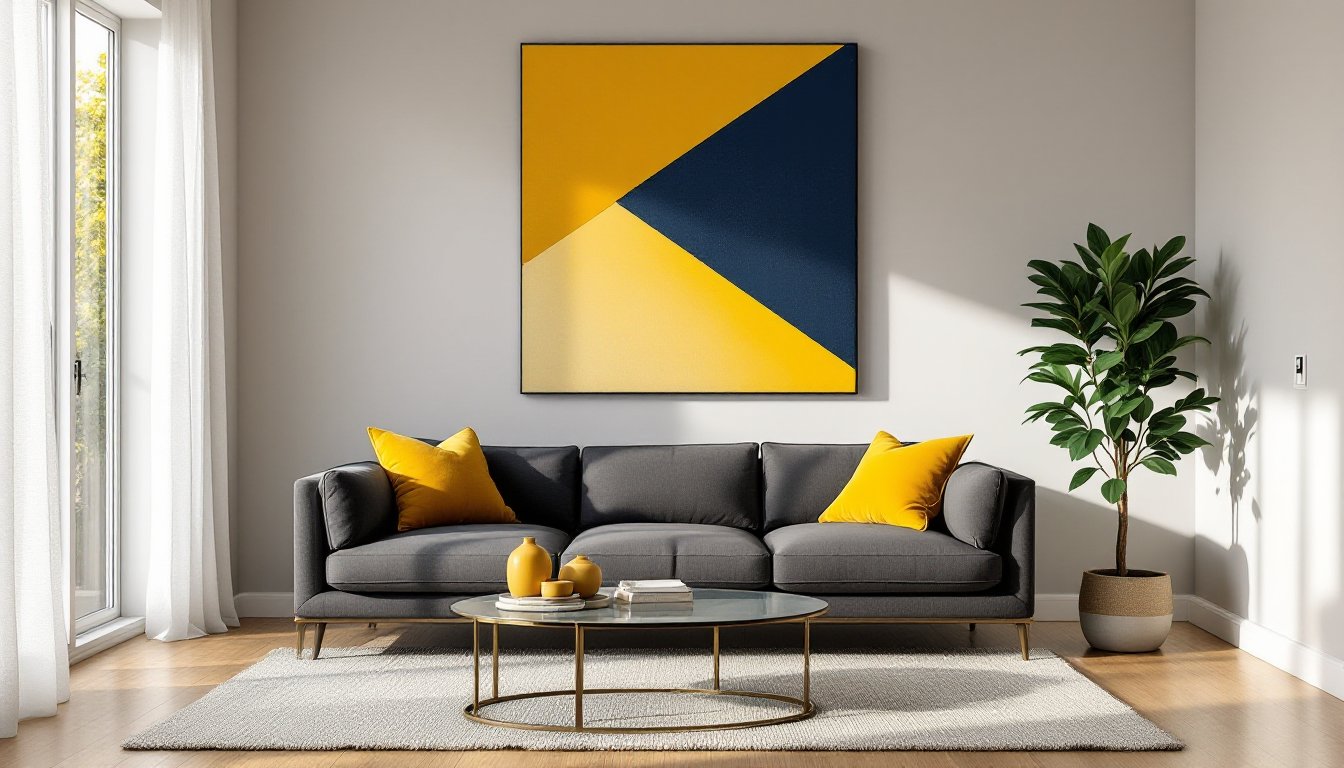
Canvas paintings offer one of the fastest ways to shift a living room’s entire mood, without touching a wall or moving furniture. Unlike posters or prints, stretched canvas adds texture and dimension that photographs can’t replicate. The right piece anchors a seating area, draws the eye across awkward architectural gaps, and sets color palettes for throw pillows, rugs, and accent walls. In 2026, homeowners are mixing oversized statement pieces with gallery walls, layering abstract shapes over traditional landscapes, and even creating their own DIY canvases with basic supplies and bold intentions. This guide covers practical canvas painting ideas sorted by style, plus sizing and placement tips to avoid the most common decorating mistakes.
Canvas paintings bring three distinct advantages over framed prints or metal wall art: depth, acoustics, and flexibility. A stretched canvas sits 0.75–1.5 inches off the wall, casting subtle shadows that change with natural light throughout the day. That physical relief makes even a monochrome piece feel dynamic.
From a practical standpoint, canvas absorbs sound better than hard surfaces. In open-concept living rooms with tile or hardwood floors, adding fabric-backed art softens echoes without installing acoustic panels. It’s a small effect, but noticeable in rooms with vaulted ceilings or minimal soft furnishings.
Canvas also adapts to evolving decor. A homeowner can swap a 36×48-inch canvas seasonally or repaint a DIY piece without patching drywall or reframing. Unlike wallpaper or built-in shelving, canvas commitments are reversible. For renters or anyone testing color schemes before committing to paint, large-scale canvas art functions as a movable accent wall.
Finally, canvas scales affordably. A single 60×40-inch stretched canvas costs less than custom framing a poster of the same size, and online print-on-demand services deliver gallery-wrapped canvases in days. For DIYers, blank canvases, acrylic paint, and painter’s tape run under $50 for a statement piece, far cheaper than commissioned art.
Abstract canvases work in living rooms that lack a single focal point, they become the focal point. In 2026, popular abstract approaches include oversized color-block compositions, fluid pour techniques, and layered geometric shapes.
Color-block abstracts use two to four bold hues in irregular sections. Think a navy triangle bleeding into mustard yellow, separated by a thin white margin. These pair well with neutral sofas and let homeowners pull accent colors into pillows or throws. A 48×60-inch vertical canvas behind a low-profile sectional balances the horizontal lines of the furniture.
Fluid acrylic pours create marbled, organic patterns. Artists (or DIYers) mix acrylic paint with pouring medium, tilt the canvas, and let gravity do the work. The result: unpredictable swirls in metallics, jewel tones, or pastels. These work best in contemporary spaces with clean lines, where the canvas provides controlled chaos against minimalist furniture.
Layered geometric shapes, circles overlapping rectangles, nested hexagons, or asymmetric grids, add structure without rigidity. Pair a teal-and-rust geometric canvas with mid-century modern furniture for visual cohesion.
When hanging abstract work, resist centering it perfectly over a sofa. Offset placement (12–18 inches to one side) often feels more intentional, especially in asymmetrical room layouts. Use a laser level to ensure the top edge stays horizontal, abstract compositions amplify even slight tilts.
Nature-themed canvases bring the outdoors in without requiring green thumbs or constant watering. In living rooms, these pieces lower visual temperature and pair naturally with wood tones, stone accents, and organic textiles.
Botanical prints, oversized fern fronds, monstera leaves, or wildflower clusters, work in farmhouse, transitional, and Scandinavian interiors. A triptych (three-panel set) of black-and-white botanical line drawings adds gallery-style elegance above a console table. Spacing panels 2–4 inches apart maintains visual connection without crowding.
Landscape canvases suit traditional and rustic spaces. Mountains at sunrise, foggy forests, or coastal dunes in muted tones (grays, sage greens, soft blues) anchor a room without overwhelming it. A 40×30-inch horizontal landscape above a fireplace mantel mirrors the hearth’s proportions and draws the eye upward in rooms with standard 8-foot ceilings.
Watercolor nature abstracts blend realism with impressionism, think blurred tree lines, watercolor washes suggesting sky and water, or abstract florals in blush and cream. These bridge the gap between bold abstracts and traditional landscapes, making them versatile for homeowners hesitant to commit to either extreme.
When selecting nature art, consider the room’s natural light. South-facing living rooms with strong sun exposure benefit from cooler tones (blues, greens) that visually cool the space. North-facing rooms with dimmer light gain warmth from autumn palettes (rust, amber, deep greens).
Geometric canvases deliver precision and rhythm, ideal for contemporary living rooms with clean lines, open floor plans, and minimal ornamentation. These designs rely on repetition, symmetry, or intentional asymmetry to create visual interest.
Line art and minimalist sketches, single-line face profiles, continuous-line cityscapes, or abstract figure drawings, suit Scandinavian and modern spaces. A black-on-white or white-on-black palette keeps these pieces crisp. Mount a 24×36-inch vertical line-art canvas on a floating shelf leaned against the wall for a casual, curated look.
Op-art and tessellations use repeating patterns to create optical movement. Hexagonal grids, interlocking chevrons, or concentric circles in high-contrast colors (black/white, navy/gold) add energy without clutter. These work above low credenzas or in alcoves where the pattern fills negative space.
Metallic and mixed-media geometric canvases incorporate gold leaf, copper accents, or resin finishes for texture. A canvas with raised geometric shapes catches light differently throughout the day, functioning almost as functional art. Pair these with statement lighting, pendant fixtures or track lighting that highlights the dimensional elements.
For gallery walls mixing geometric pieces, maintain consistent frame depth (all 1.5-inch gallery wrap, for example) and limit the color palette to three hues plus black/white. Use painter’s tape to map layouts on the wall before hammering nails. A gallery wall spanning 60–72 inches horizontally balances most standard sofas without dwarfing them.
Canvas sizing follows proportional rules, not guesswork. A piece too small disappears: too large overwhelms.
Above a sofa, canvas width should span two-thirds to three-quarters of the sofa’s width. For an 84-inch sofa, aim for a 56–63-inch canvas (or a multi-panel arrangement totaling that width). Hang the canvas so its center sits 8–10 inches above the sofa back, this typically lands the artwork at average eye level (57–60 inches from the floor to the canvas center).
Above a fireplace, account for the mantel. The canvas bottom should sit 4–6 inches above the mantel surface, not touching it. If the mantel is deep or ornate, increase clearance to prevent visual crowding. In rooms with tall ceilings, a vertical orientation (e.g., 30×40 inches) draws the eye upward and balances the hearth’s horizontal mass.
In empty wall sections, such as beside a doorway or in a dining nook, choose a canvas that fills roughly 60–75% of the available wall width. Leave breathing room, a canvas jammed corner-to-corner feels cramped.
For gallery walls, arrange canvases so the entire grouping stays within an invisible rectangle. Outer edges should align, even if inner spacing varies. Use a tape measure and level, not eyeballing, to mark nail holes. Picture-hanging strips (rated for canvas weight) work on drywall and eliminate nail holes, a plus for renters.
Weight matters. A 40×60-inch canvas can weigh 15–20 pounds. Use two D-rings with wire on the back and hang from two wall anchors (toggle bolts in drywall, screws into studs if available). Single-nail hangers risk tilting or falling.
Creating original canvas art doesn’t require formal training, just patience, basic supplies, and a willingness to experiment. DIY canvases let homeowners match exact color palettes and customize sizes.
Tape-resist geometric patterns are beginner-friendly. Prime a blank canvas with gesso (two coats, sanded smooth). Once dry, apply FrogTape or painter’s tape in stripes, chevrons, or grids. Paint over the tape with acrylic paint (two thin coats beat one thick coat for clean edges). Peel tape while paint is slightly tacky, waiting until fully dry risks tearing.
Palette knife abstracts create texture without brushes. Load a metal palette knife with acrylic paint and spread it like frosting, layering colors wet-on-wet for blended edges or letting each layer dry for sharp divisions. Mixing modeling paste into paint adds dimensional peaks that catch light.
Stenciled botanicals suit those hesitant to freehand. Buy or cut a Mylar stencil of leaves or florals, tape it to the canvas, and apply paint with a foam pouncer (dabbing, not brushing, prevents bleed). Layer multiple stencils in different colors for depth.
Acrylic pouring requires pouring medium (to thin paint and increase flow), silicone oil (for cell formation), and patience. Mix paint and medium 1:1, layer colors in a cup, then flip and pour onto a level canvas. Tilt to spread paint, let dry flat for 24–48 hours, then seal with acrylic varnish.
Safety note: Work in a ventilated area when using spray sealers or strong adhesives. Wear nitrile gloves to avoid skin irritation from acrylics, and use a drop cloth, paint seeps through newspaper.
Canvas paintings reshape a living room faster than furniture swaps or paint jobs. Whether hanging a single oversized abstract, arranging a gallery wall of botanicals, or creating a DIY geometric piece, the key lies in proportional sizing, intentional placement, and honest assessment of the room’s style. Measure twice, level once, and don’t be afraid to lean a canvas on a mantel before committing to wall anchors. The right canvas doesn’t just fill a wall, it anchors the entire space.