Phone:
(701)814-6992
Physical address:
6296 Donnelly Plaza
Ratkeville, Bahamas.

Phone:
(701)814-6992
Physical address:
6296 Donnelly Plaza
Ratkeville, Bahamas.
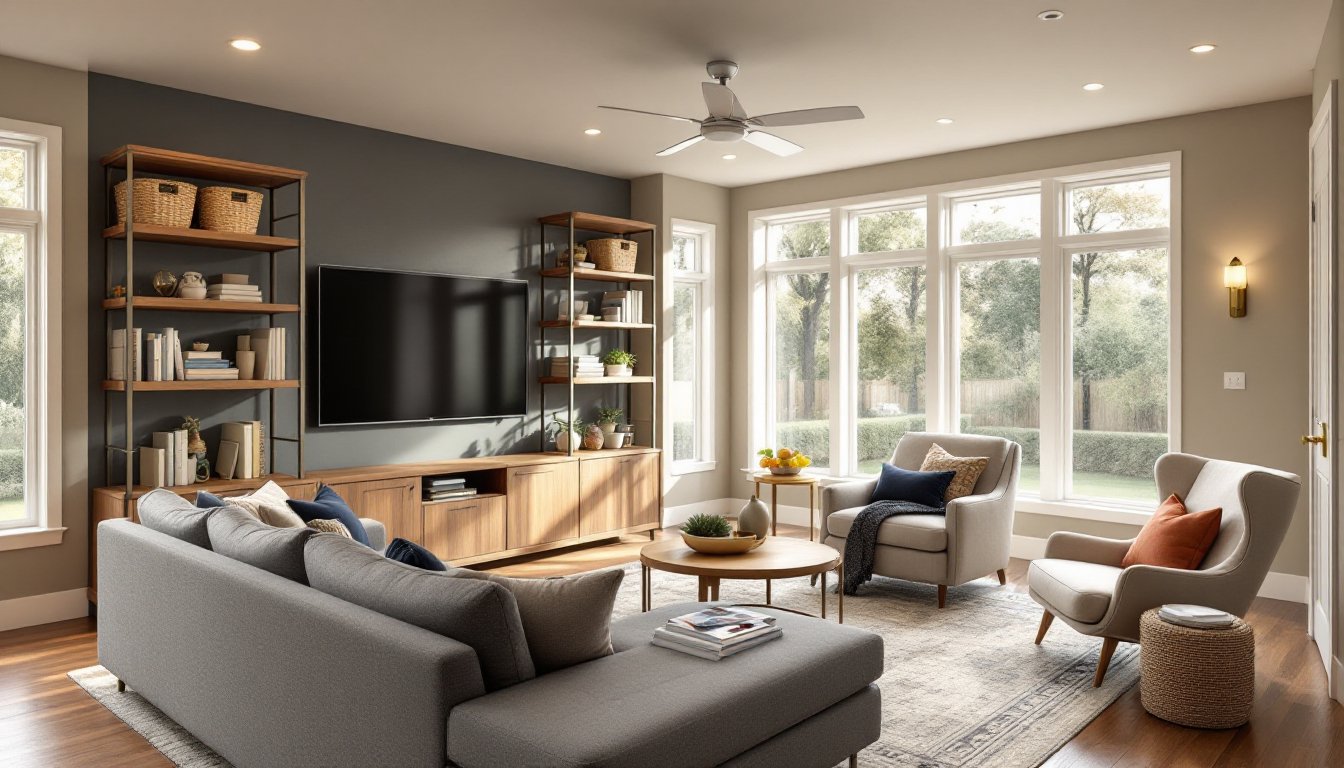
The family room serves as the heart of most homes, a place where kids sprawl with assignments, adults decompress after work, and everyone gathers for movie night. Unlike formal living rooms that collect dust, family rooms take real abuse and need to work hard. Designing one that balances durability with comfort requires more than tossing a sectional at the longest wall and calling it done. This guide walks through seven practical strategies to create a family room that handles daily life while looking intentional, from layout decisions that improve traffic flow to lighting choices that support everything from reading to gaming.
Before picking paint colors or furniture, homeowners need to map out how the space actually gets used. A family with toddlers has different priorities than empty nesters or young professionals.
Start by listing the primary activities: TV watching, gaming, assignments, play, reading, entertaining. Be specific. “Watching TV” could mean casual background noise or a dedicated home theater setup with surround sound and light control. Each requires different furniture arrangements and infrastructure.
Consider traffic patterns and adjacencies. Family rooms near the kitchen naturally become multipurpose spaces where cooking overlaps with conversation. Those adjacent to mudrooms or garages handle more mess and need tougher finishes. Rooms opening to a backyard benefit from furniture that doesn’t block sightlines to kids playing outside.
Safety and code considerations matter for families with young children. Wall-mounted TVs should use proper blocking and anchors rated for the weight, most modern 65″ TVs weigh 50-70 lbs. Furniture taller than 30″ should be anchored to wall studs per ASTM F3096-14 stability standards to prevent tip-overs. Electrical outlets near play areas should have tamper-resistant receptacles (required by NEC in all new residential construction since 2008, but worth retrofitting in older homes).
Layout dictates how well a family room works. Poor furniture placement creates dead zones, awkward traffic paths, and seating where nobody actually sits.
Measure the room accurately before shopping. Note locations of windows, doors, outlets, cable/data jacks, and HVAC vents. A 12′ x 16′ room has 192 square feet, but usable floor space shrinks once you account for door swing clearances (36″ minimum per IRC) and traffic aisles.
Create conversation zones rather than lining furniture against walls. Float seating pieces 12-18″ from walls to improve flow and make the space feel larger. Arrange primary seating within 8-10 feet of each other for comfortable conversation, any farther and people strain to hear.
For TV-focused rooms, follow the screen size formula: viewing distance should be 1.5 to 2.5 times the diagonal screen measurement. A 65″ TV needs seating 8-13 feet away. Mount the center of the screen at seated eye level, typically 42-48″ from the floor, not above the fireplace where it strains necks.
Traffic flow requires at least 30-36″ clearance for main walkways. Don’t force people to squeeze behind seated family members to reach other parts of the house. If the family room is a pass-through space, arrange furniture to create a clear path along one side rather than blocking the center.
Consider multiple activity zones in larger rooms. A reading nook in the corner, a play area with toy storage, and a main seating group can coexist if each has defined boundaries, an area rug, different lighting, or furniture placement signals the zone change.
Family room furniture needs to survive spills, pet claws, and daily wear without looking shabby in two years. Construction quality and fabric choice matter more than trendy styles.
Upholstery fabrics rated for at least 15,000 double rubs (Wyzenbeek test) hold up to moderate use: 30,000+ handles heavy family traffic. Performance fabrics like solution-dyed acrylics and polyesters resist stains and clean easily with bleach solutions, critical for homes with kids or pets. Leather and faux leather wipe clean but show scratches. Avoid delicate weaves, linen, and velvet unless the room sees light use.
Look inside the frame before buying upholstered pieces. Quality sofas use kiln-dried hardwood frames (oak, maple, or ash) joined with dowels and corner blocks, not stapled softwood. Eight-way hand-tied springs or sinuous (serpentine) springs provide better support and longevity than cheap webbing. Cushions should use high-density foam (1.8 lb/ft³ minimum for seats) wrapped in batting, low-density foam compresses into permanent divots within a year.
Coffee tables and side tables take abuse. Choose hardwoods, engineered wood with durable laminate, or metal, avoid glass tops with young children. Round or oval tables eliminate sharp corners. Height should be within 2″ of the sofa seat height (typically 18-20″).
Sectionals maximize seating in smaller rooms but measure doorways first. Most upholstered pieces need a 32″ clearway to maneuver through doorways and hallways. Modular sectionals break into smaller pieces, making delivery and future moves easier.
Color affects mood and perceived room size, but it also has practical implications in family spaces.
Neutral bases, grays, greiges, warm beiges, provide flexibility and hide wear better than stark white. Mid-tone neutrals camouflage scuffs and handprints on walls, important for high-traffic areas. Paint sheen matters: eggshell or satin finishes clean easier than flat paint while avoiding the glare of semi-gloss. Most manufacturers recommend satin for family rooms and hallways.
Add personality through accent colors in easily changed elements: throw pillows, area rugs, window treatments, and accessories. This approach lets homeowners refresh the look without repainting or replacing major furniture.
Darker colors work well on accent walls or built-ins, adding depth without overwhelming the space. Painting the wall behind the TV a few shades darker reduces eye strain from screen glare. Navy, charcoal, deep green, and warm terracotta hold up visually in rooms with pets and kids, they don’t show every smudge the way white does.
Test paint samples on multiple walls before committing. Colors shift dramatically based on natural light exposure and artificial lighting color temperature. Buy sample pots and paint 2′ x 2′ sections, observing them at different times of day.
Wood tones add warmth but should coordinate. Mixing wood finishes works when they have similar undertones, warm honey tones pair with walnut better than orangey oak pairs with cool gray-washed wood. Limit the room to 2-3 wood tones maximum to avoid visual chaos.
Layered lighting, ambient, task, and accent, makes family rooms functional morning to night. One overhead fixture rarely does the job.
Ambient lighting provides general illumination. Recessed cans spaced 4-6 feet apart deliver even coverage: use 4″ cans in rooms with 8′ ceilings, 5-6″ cans for 9-10′ ceilings. Calculate lumens needed based on room size: family rooms need 10-20 lumens per square foot. A 200 sq ft room needs 2,000-4,000 lumens total. LED bulbs between 2700K-3000K create warm, inviting light suitable for family spaces.
Ceiling fans with integral light kits provide both lighting and air circulation. Make sure the fan is rated for the room size, blade span should be 42-48″ for rooms up to 225 sq ft, 52-56″ for larger spaces. Mount the fan so blades sit 8-9 feet above the floor and at least 18″ from walls.
Task lighting supports specific activities. Reading areas need 50 lumens per square foot, a swing-arm wall sconce or floor lamp with a 75-100W equivalent LED bulb. Position reading lights 15-18″ to the side of the chair and 28-34″ from the seat to avoid glare and shadows.
Table lamps on side tables provide flexible task light and add visual warmth. The bottom of the shade should sit at eye level when seated, typically 38-42″ from the floor.
Accent lighting highlights architectural features or artwork. Track lighting, picture lights, or LED strip lights under shelving add dimension. Dimmer switches (standard phase-cut or ELV for LEDs) let homeowners adjust mood and save energy. Install dimmers rated for the load and bulb type, LED-compatible dimmers prevent flickering and buzzing.
Family rooms accumulate clutter fast, remotes, toys, throws, books, game controllers. Built-in or purposeful storage keeps chaos manageable.
Built-in shelving and cabinets offer the most storage per square foot. Floor-to-ceiling units maximize vertical space, especially valuable in smaller rooms. Lower cabinets with doors hide toys and media equipment: open shelving above displays books and decor. Standard shelf depth runs 10-12″ for books, 14-16″ for media components.
For DIY built-ins, attach wall-mounted units to wall studs using 3″ screws into solid framing, not just drywall anchors. Units wider than 36″ should include center support or risk sagging. Adjustable shelving on standards and brackets allows flexibility as storage needs change.
Media consoles should accommodate equipment dimensions plus ventilation. A/V receivers need 3-4″ of clearance above and 2″ on sides to prevent overheating. Consoles with built-in cable management cutouts prevent the rat’s nest of cords behind the TV.
Storage ottomans and benches provide dual-purpose solutions, extra seating and hidden storage for blankets, games, or seasonal items. Cube organizers with fabric bins work well for kids’ toys, bins pull out easily and toss in the wash when needed.
Baskets and decorative boxes corral daily clutter on open shelving. Woven baskets, wire bins, or wood crates add texture while keeping smaller items contained. Label storage in kids’ spaces to help everyone put things back.
Coat hooks or a small wall-mounted rack near the entry point handles jackets and bags, preventing them from landing on furniture. Mount hooks at heights accessible to all family members, lower hooks for kids encourage independence.
A well-designed family room balances real-world durability with intentional style. It’s not about perfection, it’s about creating a space that handles messy, everyday life without falling apart or looking like chaos. Focus on smart layout, quality pieces that last, and flexible storage. When these fundamentals are solid, the room naturally becomes the gathering place every family needs.
